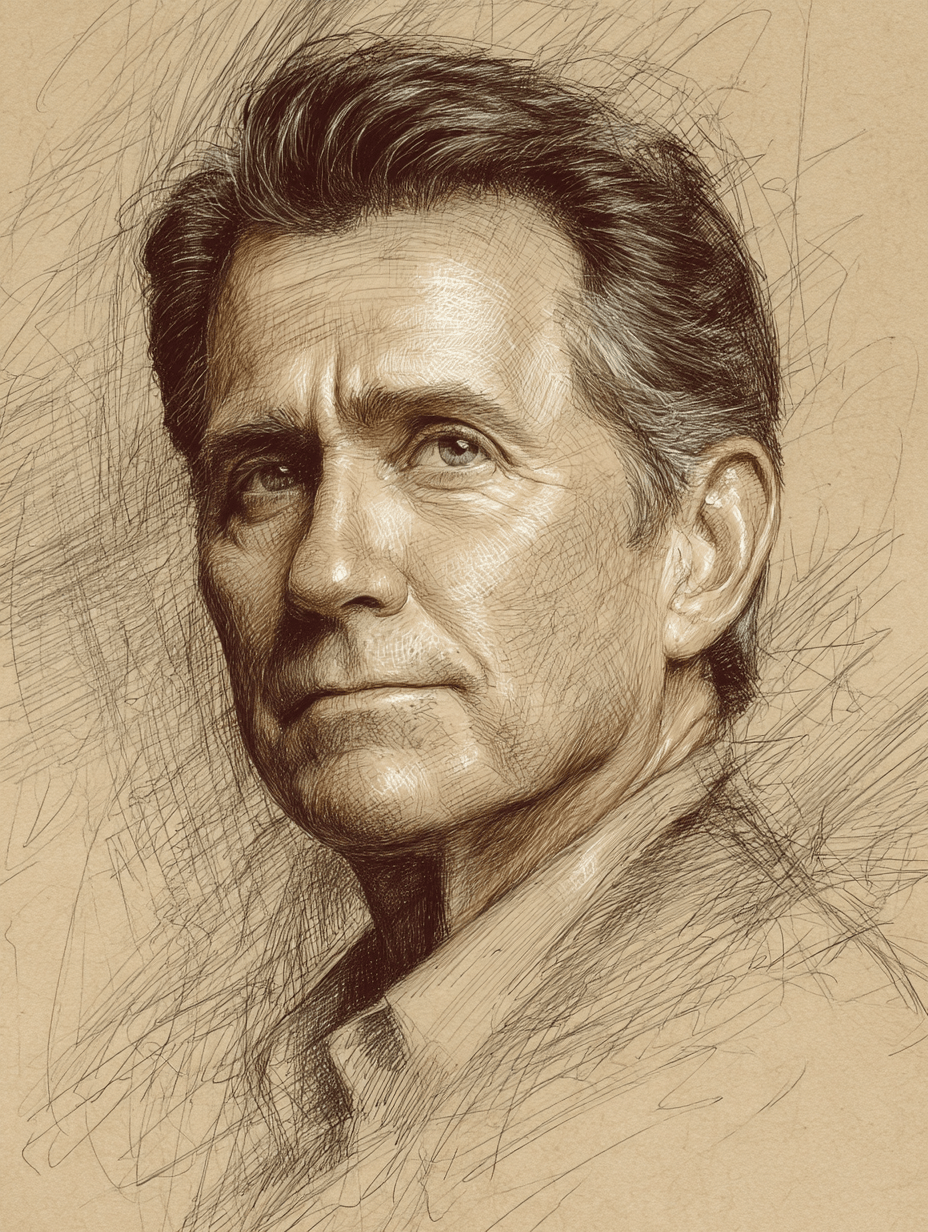
10 January 1995
Broadcast from the White House, Washington, District of Columbia, via whatever means remain
My fellow Americans.
I am speaking to you tonight from the White House. The signal is being carried by whatever transmitters are still standing, by ham radio operators who have kept their equipment dry, by the military frequencies that have not yet gone silent. If you are hearing this, you are among the survivors of a war that we did not win. I am not going to tell you otherwise. I have never lied to you, and I am not going to start tonight.
This message is addressed in particular to the people of Boston, Massachusetts, whose siege was lifted one year ago this month. You endured 648 days of encirclement, bombardment, and starvation. You have lost more than two hundred thousand of your fellow citizens. You have lost your homes, your hospitals, your schools, your churches, and in many cases your families. The government of the United States, which existed to defend you, did not defend you. I am its President, and that is my responsibility, and I am sorry.
I want to speak plainly about what happened in that city. Not to relitigate the war—there will be time for that, or there will not—but because the record of what happened in Boston is the most important thing this government has left to preserve. It matters that we understand what was done there. It matters that we understand who did it.
The siege of Boston began on the 8th of September, 1992, and ended on the 1st of April, 1994. For 648 days, a city of more than half a million people was cut off from the rest of the country. The electricity failed in the first month. The water failed shortly after. The pharmaceutical supply collapsed in October of 1992, and after that there were no antibiotics, no insulin, no chemotherapy, no antipsychotics, no anesthesia. The food ran out. The ration fell, at its lowest point, to 125 grams of bread per day for a non-working adult—that is the weight of a bar of soap, and half of it was sawdust. The winter of 1992 to 1993 was the coldest in a century. By the spring of 1993, more than a hundred thousand people were dead.
And you survived.
I want to tell you what you survived. You survived epidemic typhus, a disease that had not been seen in an American city since the nineteenth century, transmitted by body lice that infested ninety percent of the shelter population. You survived diphtheria, which returned to Boston in November of 1992 and killed children who had never been vaccinated because the vaccine had run out. You survived dysentery and cholera. You survived pneumonia without antibiotics, broken bones without plaster, surgery without ether. You survived the closure of the psychiatric hospitals, which became unheated warehouses where patients died of cold and neglect because the staff who fed them had themselves stopped eating. You survived the collapse of cardiac care, the exhaustion of insulin, the withdrawal of seizure medication, the absence of dialysis. You survived the decision—and it was a decision, made by physicians who had no good options—to classify chemotherapy as non-essential, which meant that a hundred and fifty people who would have lived five years died within six months.
You survived, and some of you did things you will never speak of. You ate things you will never name. You made choices between your children, or between your parents and your children, or between yourself and the person next to you in the ration line. You did these things not because you were bad people, but because you were starving people, and the human brain under starvation does not work the way it works when it is fed. You know this. You have lived it. I am telling you what the physicians of the Massachusetts General Hospital wrote down in their logs, which I have read, and which will be published even if this government is not there to publish them. They wrote that the behavior they observed in the siege—the apathy, the obsession, the violence, the cannibalism—was not a moral failure. It was a predictable neurological consequence of prolonged caloric deprivation. They wrote that they recorded it without judgment. They wrote that the people who did those things were not monsters. They were human beings under conditions that no human being should have to endure. I am not asking you to forgive yourselves. I am telling you what your doctors wrote down.
But you also did other things. You planted vegetable gardens in the Common and in the Public Garden and in the median strips of the highways, and by the summer of 1993 those gardens were producing fifty thousand tons of food. You taught children in basements by candlelight. You boiled river water and distributed it to your neighbors. You held the hands of the dying when there was nothing else to give them. You performed surgery without anesthesia and without gloves and without antibiotics, and some of your patients survived. You built an ice road across the harbor when it froze, and you drove trucks across it under shellfire, and you brought food into the city that way. You fought at the Neponset Line, and at the Battle of Boston Harbor, and in a thousand smaller engagements that will never be recorded. You buried your dead in mass graves, and you said words over them when you had words, and when you had no words you stood in silence and then you went back to work.
The Republic did not save you. You saved each other.
The government of the United States will dissolve before the end of this month. I am not going to pretend that this is anything other than what it is. We lost the war. We could not hold the country. The documents of surrender have been signed, or they will be shortly. What happens after that is not mine to determine.
But I want to say this to the people of Boston, and to anyone else who is listening.
The Republic was never this building. It was never this office. It was never the Congress or the courts or the Constitution, though the Constitution was the best thing we ever wrote. The Republic was a proposition. It was the idea that ordinary people, governing themselves, could produce out of their own households something that no tyrant could manufacture and no army could compel. It was the idea that a free citizen would decide, on their own, without orders, without reward, without anyone watching, to do the right thing.
That proposition was tested in your city. It was tested by cold and hunger and disease and the systematic destruction of every system you had built to keep yourselves alive. And you did not fail it.
I have in front of me the surgical log of a young man named Nestor Coleman Cavendish. He was a resident at Massachusetts General Hospital. He was 26 years old when the siege began and 27 when he died, on the 20th of January last year, at the Battle of Boston Harbor. In the interval, he performed more than 2,400 operations. He lost his mother and his fiancée both in the bombing of the Genzyme building in September of 1992. He lost a third of his body weight. He developed scurvy and night blindness and a resting heart rate of 38. On the last morning of his life, he volunteered for a forward aid station that no one had ordered him to man. He went out into artillery fire five times to recover wounded men. Four of them survived. On the fifth trip he was hit, and he tied his belt around his own severed artery, and he kept pulling the soldier he had found, and he died. The soldier lived.
He was a physician. He was an American. He was not a soldier until the emergency commission that gave him a lieutenant’s bars, and he was not acting under orders when he did what he did. He was acting under his own understanding of what he was for. That understanding was formed in a free country, in a free school, in a professor’s house in Cambridge. And it survived 575 days of starvation and cold and darkness and death, and it was intact on the morning he died.
If the Republic produced that man, then the Republic did not fail. The government failed, and the army failed, and the supply lines failed, and the politics failed, and I failed. But the Republic—the thing those failures could not touch—that is still standing. It is standing in every person in Boston who fed a neighbor when they had nothing to eat themselves. It is standing in every nurse who stayed at her post when the heat went out. It is standing in every parent who told their child a story in the dark so the child would not be afraid. It is standing in the graves on Bunker Hill, where the dead lie with their friends.
You are the Republic. You always were. No one can take that from you.
I do not know what comes next. The surrender will happen. The occupation will happen. There will be people who tell you that everything we believed in was a lie, that it was always a lie, that the experiment failed. They will point to the dead in the mass graves and the children who died of diphtheria and the people who ate their dead, and they will say: this is what your freedom produced. This is the truth about human beings. They are animals, and they need a master.
You know better. You lived it. You know what human beings are capable of when everything is taken from them, and you know that it is not only horror. It is also the woman who gave half her bread to a stranger. It is the doctor who crawled into artillery fire. It is the family that adopted the orphan of a neighbor they did not like. You have seen the worst of what people can do. You have also seen the best. Do not let anyone tell you that the worst was the truth and the best was an illusion. The best was the truth. The worst was what happened when the truth was starved and frozen and bombed for 648 days. That is not a contradiction. That is the nature of the flesh. You know the flesh better than anyone.
I am going to ask one thing of you. It is the only thing I have left to ask.
Remember. Write it down. Tell it to your children, if you have children, and to the children of your neighbors, if you do not. Tell them what happened. Tell them who died and how they lived. Tell them the names of the people who helped you and the people you helped. Tell them the truth about what you did and what you failed to do. Do not let anyone turn the siege of Boston into a myth. It was not a myth. It was a city full of ordinary people who were pushed past the breaking point, and some of them broke, and some of them did not, and the ones who survived are still here, and they are still ordinary, and they are still capable of love and decency and hope. That is the record. Keep it.
One more thing. When the worst of this is over—and it will be over, the worst things always are—you will have to decide what to build. You will have to decide whether the American experiment was worth what it cost, and whether it is worth trying again, in some new form, under some new name. I will not be there to give you my opinion. But I will give it to you now.
It was worth it. Every day of it. Every death of it. Every failure of it. Not because we were righteous—we were not righteous. Not because we kept our promises—we did not keep them. But because the thing we tried to do is the only thing worth trying. The idea that human beings can govern themselves, without a master, without a king, without a party that knows better than they do what is good for them—that idea is worth dying for. You have proved that it is worth surviving for. You are the evidence. You are the proof. You are the city that starved and froze and bled and did not become a mob.
God bless the city of Boston. God bless the dead who lie in her soil. God bless the survivors who carry her forward. And God bless the United States of America, which was never a place on a map. It was an idea in the hearts of its people. And that idea is not dead. It is in you. Keep it alive.
Good night. And good luck.
REUBIN O’DONOVAN ASKEW
President of the United States
Washington, District of Columbia · 10 January 1995

Leave a Reply